
Description
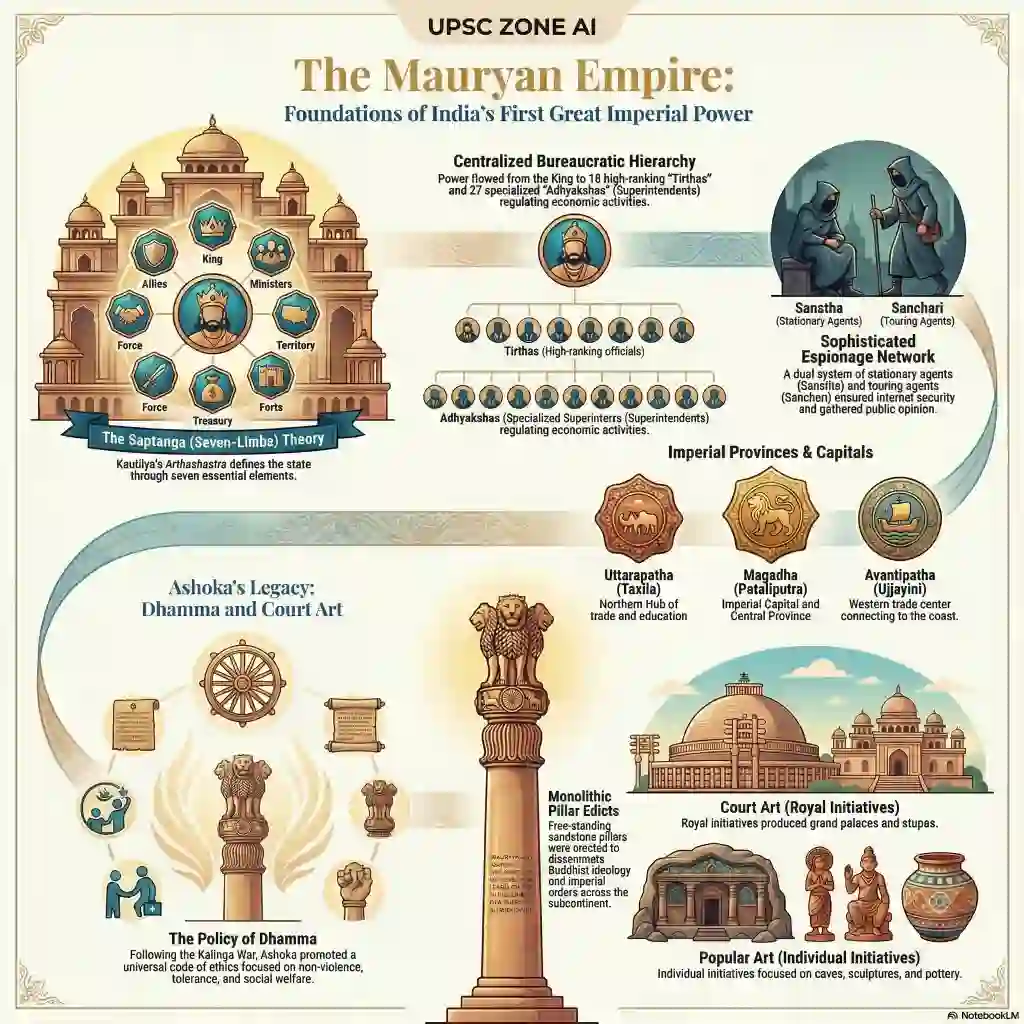
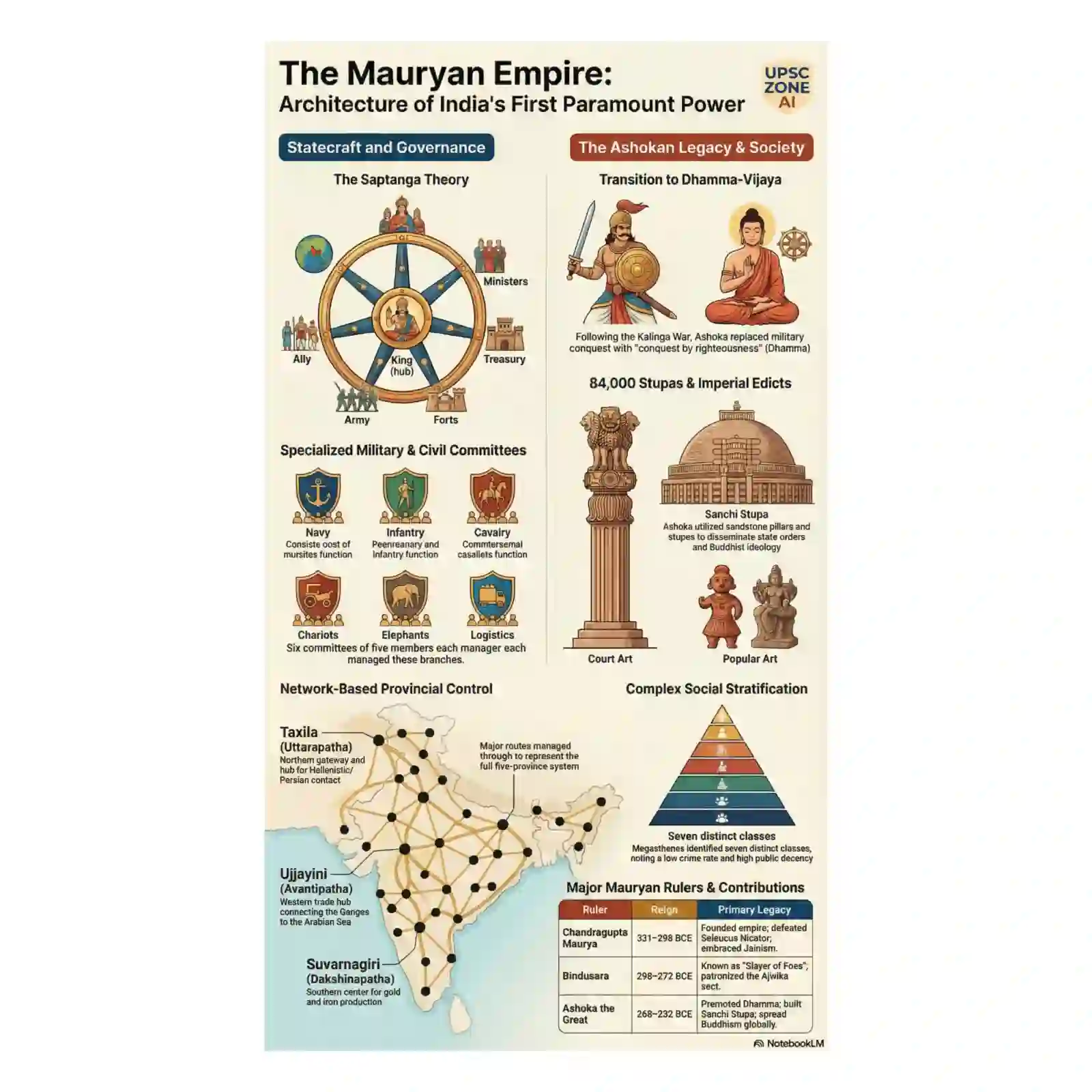
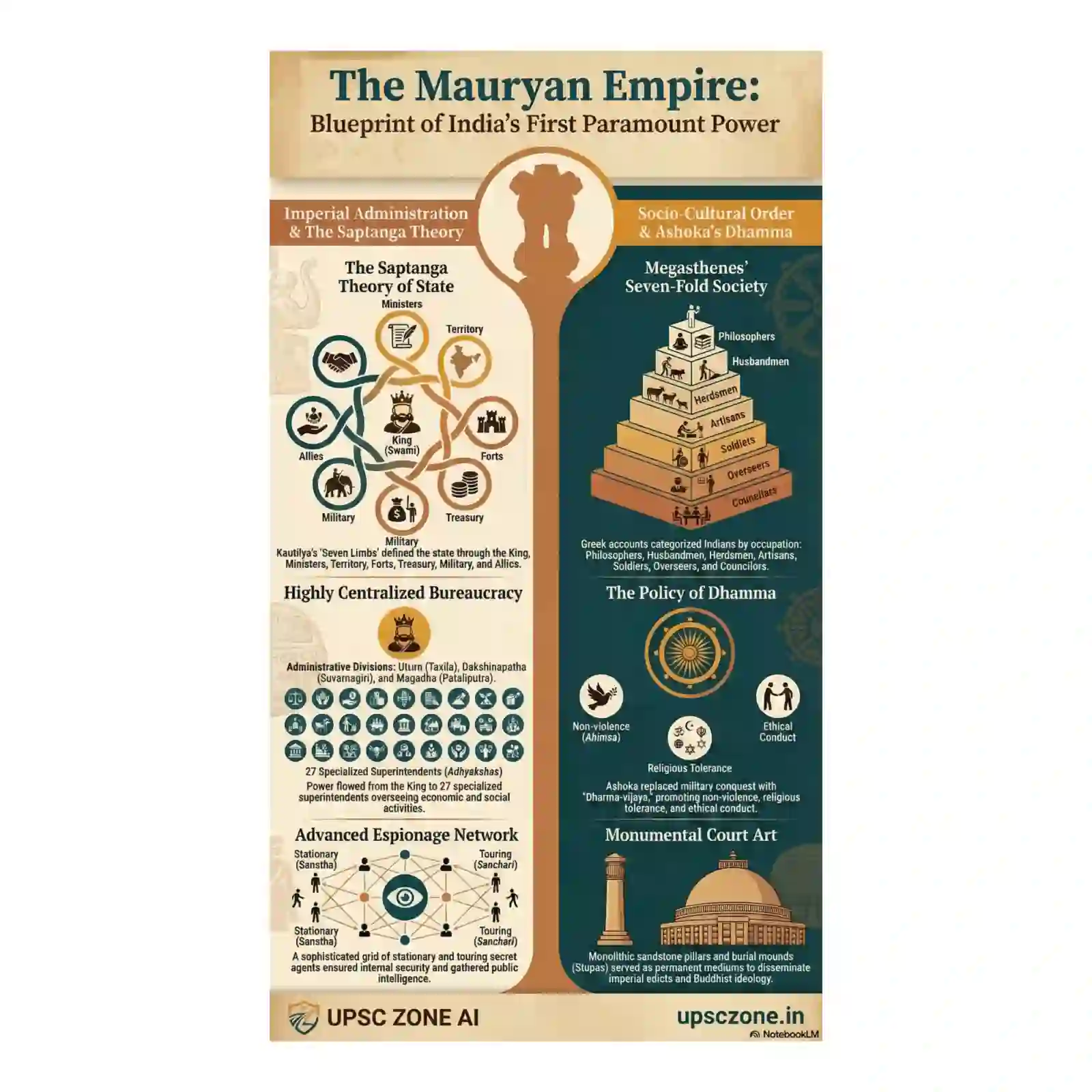
The provided texts offer a comprehensive study of the Maurya Empire, focusing on its political foundations, social stratification, and ideological influence under rulers like Chandragupta and Ashoka. They detail the empire’s vast territorial extent, which reached across the Indian subcontinent through a sophisticated network of trade routes and urban centres. Central to the discussion is the concept of Dhamma, an ethical framework promoted by Ashoka to foster religious pluralism and social harmony among diverse groups, including Buddhists, Jains, and Brahmins. Modern scholars analyze whether this system represents an early form of secularism or a “civil religion” designed to consolidate imperial power. Additionally, the sources examine the varna system, the status of women, and the absence of traditional slavery, alongside the empire’s lasting architectural legacy in stone.

Reviews
There are no reviews yet.